
There Is No Human Hope Without the Promise of Ecstasy
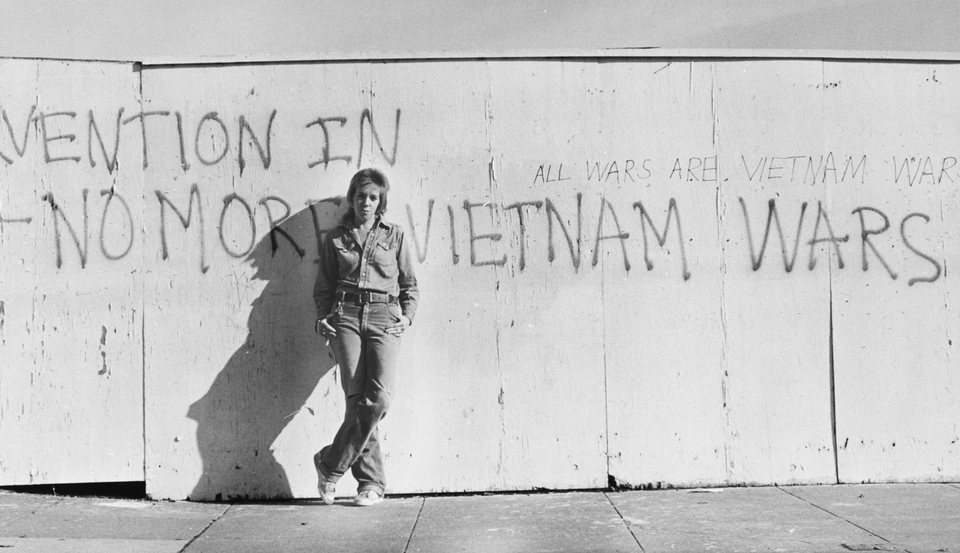
Lisa Duggan on Amber Hollibaugh (1946-2023)
Over the last decade and a half, we have lost many queer left icons, among them José Esteban Muñoz, Dorothy Allison, and Amber Hollibaugh. I met Amber in 1979, the same year she electrified crowds at the White Night Riots, following the light sentencing of the murderer of Harvey Milk and George Moscone in San Francisco. Milk’s friend Sally Gearhart made clear that night to the angry crowd that the rage was not about support for incarceration, but about the inequities in the justice system that would find Dan White guilty of only voluntary manslaughter due to diminished capacity, allegedly caused by his depression and consumption of junk food, in what came to be known as the “Twinkie defense.” Gearhart argued that every prisoner in every prison had acted out of some kind of diminished capacity, but that the justice system rarely allowed such mitigation for less privileged defendants. But the speaker who really set the crowd on fire that night was Amber Hollibaugh, who grabbed the mic amid calls to “let her speak!”
In recordings, Hollibaugh can be heard proclaiming “I don’t think it’s wrong to feel the way we feel, we should feel like this more often.” Her impassioned call was of a piece with her belief in the importance of passion for politics. She not only rejected the bourgeois civilities of respectability politics, but called always for the importance of anger, joy, sexual desire, and the longing for justice in the practice of politics.
Hollibaugh grew up poor in Bakersfield, California, the daughter of a Romani father and an Irish mother. She began her life in politics traveling the country in support of labor organizing and the civil rights movement (working with the farmworkers union and SNCC), supporting herself as a sex worker. In her memoir, My Dangerous Desires: A Queer Girl Dreaming Her Way Home (Duke University Press, 2020) she described herself as a lesbian sex radical, ex-hooker, incest survivor, gypsy child, poor white trash, and high femme dyke. She went on to be, among many other things, the executive director of Queers for Economic Justice, the author of My Dangerous Desires: A Queer Girl Dreaming Her Way Home, and the producer director of the award-winning documentary, The Heart of the Matter, about HIV-AIDS.
When I met Amber at the New York Gay Socialist Salon in 1979, she was thirty-three and I was twenty-five. She was already a hero to me, as a high femme working-class dyke among more “respectable” middle-class lesbian feminists who at that time often disdained her aesthetic and could not understand her politics. Along with others including Joan Nestle and Jewelle Gomez, she brought labor, race, and class politics into the room everywhere she went. She became an icon for the queer left, but it is never fucking easy to be an icon. She was a big target for all kinds of hostility, for her politics, her appearance, her sexuality. She absorbed a lot of pain from these attacks, that often came from lesbians and feminists. Along with Dorothy Allison and Gayle Rubin, she was vilified during the so-called feminist “Sex Wars” of the 1980s as a pervert and a stooge for the male-dominated left, and for patriarchy in general. She stood up for sex workers (and as one) when it truly was not safe to do so (it still isn’t). She took it and took it and took it, and the toll was real, in terms of her health and her state of mind.
But Hollibaugh was astoundingly resilient, and got back up every time she was knocked down. She spoke frequently and with powerful charisma on the necessity of linking race, class, gender, and sexuality; on the importance of a critical understanding of capitalism and imperialism, on taking a global view; and on understanding every issue that affects poor people and people of color as a queer issue, including health care, social safety net supports, access to childcare, immigrant defense, and labor organizing. That call is not as exceptional today as it was when she was speaking from the 1980s forward, partly because of her and others like her.
Her inventions were especially pointed on the crucial role of sexual and gender freedom in radical politics. She believed that political and sexual desire cannot be separated, and that a politics without room for ecstasy could never succeed in creating a livable world. People do not want to be just “labor” or “working class” or LGBTQ+, or POC, she argued. They want joyful lives in free communities without poverty or fear. If our politics is too siloed, or too “respectable,” or too narrow, we cannot inspire and motivate, we cannot create a world truly worth fighting for.
AMBER: My sisters and brothers —
CROWD: let her speak! Let her speak!
AMBER: It’s up to us! It’s time for us to understand who they serve, who they play to, who they lay down for.
CROWD: tell the truth! [cheers]
AMBER: Dan White ate a hostess twinkie. Now I say it’s time to pass out the candy. It’s time we stood up for each other. That’s what Harvey meant to us. He wasn’t some big leader, he was one of us. I don’t think it’s wrong for us to feel like we do. I think we should feel like it more often.
CROWD: [huge cheer]
AMBER: It’s our time and gay children that are coming up, and it’s about time that we prepared a place for them. We need to be together and we need to be strong.
CROWD: We are together!
AMBER: And don’t you listen to anybody that tells you you don’t need to fight back [to get your rights.] Every single gay person in this crowd –
Crowd: Fight back! Fight back!
Photograph courtesy of the Cornell Library Human Sexuality Collection and Brenda J. Marston.